
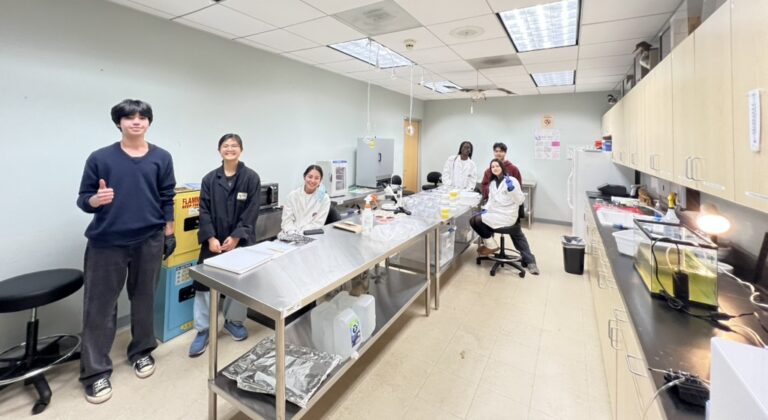
We are honored that eight high school students from the Torrance Unified School District, who conducted science projects at the Marsh under the scientific mentorship of Miriam Taeubel, Ph.D. (Madrona Marsh Instructor II/California Earth Science), were accepted to participate in the Los Angeles County Science and Engineering Fair on March 9.
Several Students also received awards. We are very proud of their dedication, hard work, and scientific curiosity throughout this research process.
1) Title: Phytoremediation Potential of Mule Fat (Baccharis salicifolia) for Copper and Zinc Removal in California Wetlands
Students: Charlotte Moo and Evangeline Ojo (Second Place)
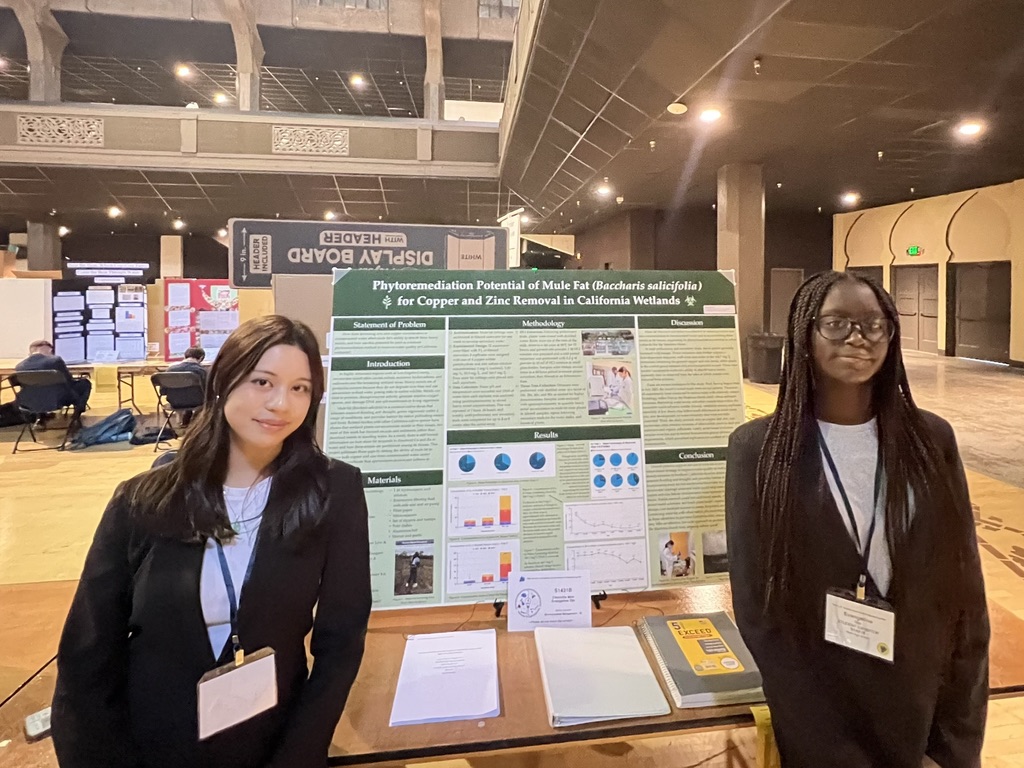
West High School
12th grade
Abstract:
This project evaluated the phytoremediation potential of mule fat (Baccharis salicifolia), a California native wetland plant, to remove copper and zinc from contaminated water. The study was conducted at the Madrona Marsh in Torrance, California, one of the few remaining natural freshwater marshes in Los Angeles County, where stormwater runoff contributes to heavy metal contamination.
Field-collected mule fat cuttings (20–30 cm) were acclimated in rainwater for one week and exposed to copper and zinc sulfate solutions at four concentrations: 0 mg/L (control), 3.33 mg/L, 33.3 mg/L, and 166.7 mg/L. Twenty-four 3-liter tanks were established with three replicates per treatment. Water samples were collected at 1 hour, 24 hours, and weekly for four weeks, then analyzed using spectrophotometry to quantify changes in metal concentrations. The experiment was repeated in two independent trials to validate results. Following each trial, plants were separated into roots, stems, and leaves. Tissues were oven-dried at 66°C for one week, ground using a mortar and pestle, and processed using cold hydrochloric acid extraction. Diluted samples were analyzed to quantify metal accumulation.
Results showed significant reductions of copper and zinc across all treatment groups. Metal uptake increased with exposure concentration, with the highest accumulation consistently observed in root and stem tissues. Plants remained viable throughout the experiment, indicating strong tolerance to both metals. These findings suggest that mule fat is an effective, low-cost, and environmentally sustainable option for reducing heavy metal contamination and supporting restoration efforts in California wetlands.
2) Title: Comparative Analysis of Bacterial Communities in Two Urban Wetlands: Madrona Marsh and Henrietta Basin
Student: Yuma Maeda (Third Place)
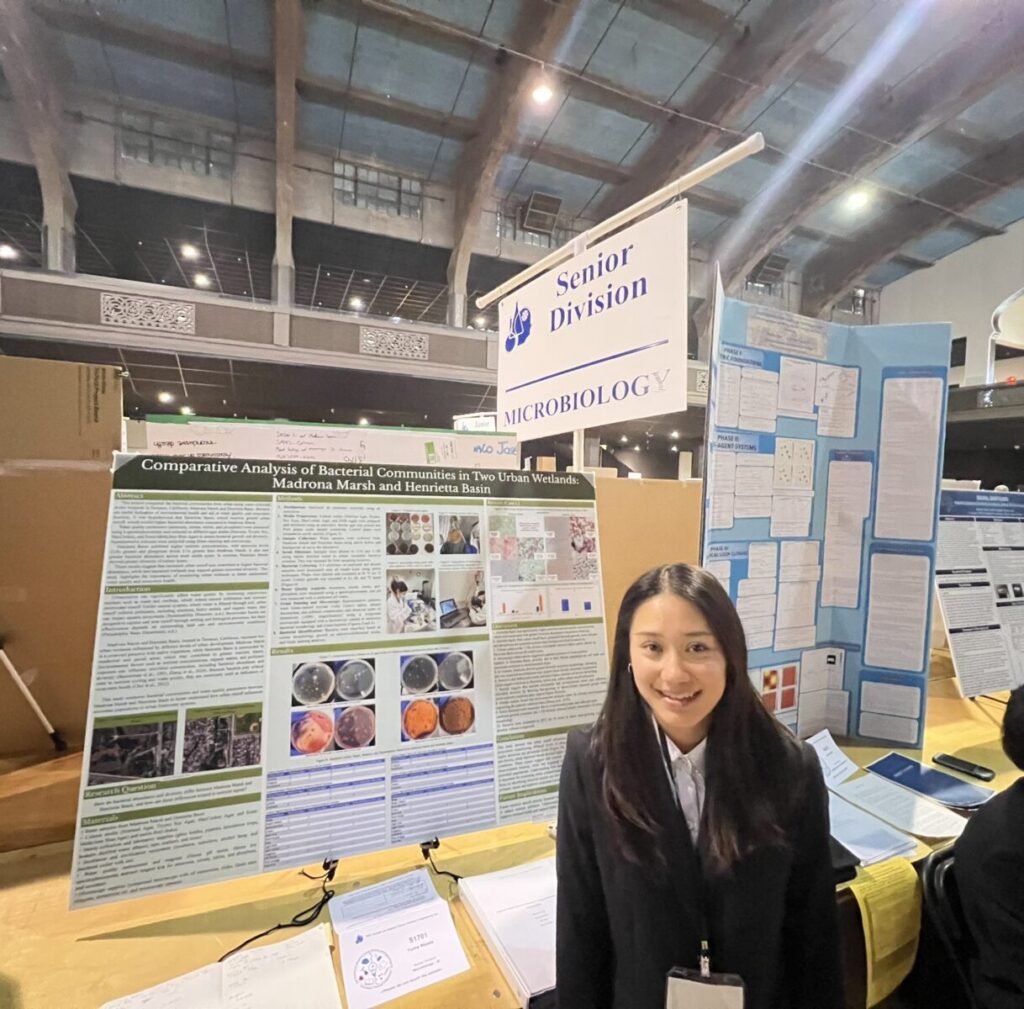
West High School
11th Grade
Abstract:
This project investigated and compared bacterial communities from urban sump water collected at two wetlands in Torrance, California: Madrona Marsh and Henrietta Basin. Bacteria play important roles in water quality and ecosystem function, making them useful indicators of environmental health. It was hypothesized that Henrietta Basin, which receives greater urban runoff, would exhibit higher bacterial abundance compared to Madrona Marsh.
Water quality parameters, including ammonia, nitrate, nitrite, and phosphate, were measured using a spectrophotometer. Water samples from both sites were serially diluted (1:10 and 1:100) and cultured on Nutrient, Tryptic Soy, MacConkey, and Eosin Methylene Blue Agar to assess bacterial growth and diversity. Plates were incubated at 30°C for 48 hours and monitored over time. Representative colonies were Gram-stained and examined microscopically at 100× magnification. Bacteria were classified only by Gram reaction and general morphology.
Henrietta Basin exhibited significantly higher nutrient concentrations, with ammonia levels 13.92 times greater and phosphate levels 3.07 times greater than Madrona Marsh. Henrietta also showed a greater number and larger size of bacterial colonies across most media types. In contrast, Madrona Marsh displayed greater bacterial diversity, including more non-lactose fermenting colonies on MacConkey Agar. Gram staining revealed predominantly Gram-negative short rod-shaped bacteria (coccobacilli), along with coccoid forms.
These findings suggest that increased urban runoff may contribute to higher bacterial abundance, while less impacted wetlands may support greater microbial diversity. This study highlights how nutrient inputs influence bacterial populations and emphasizes the importance of monitoring urban wetlands to better understand ecological health and water quality dynamics.
3) Title: Effects of Copper Exposure on Survival and Heart Rate in Daphnia magna
Students: Marcus De Silva and Chelsea Nguyen (Honorable Mention)
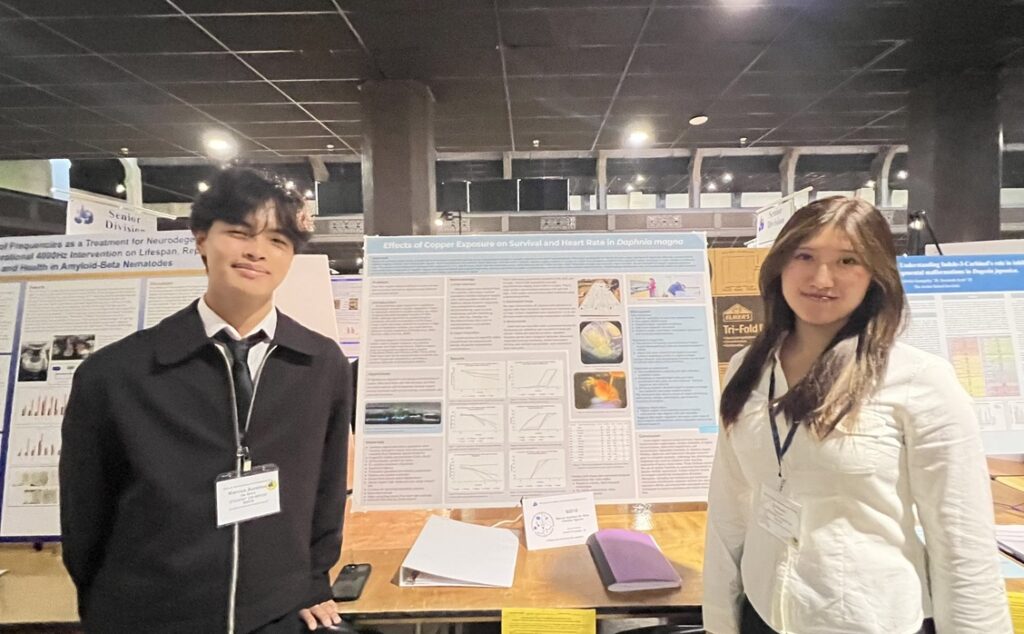
Grade: 11
School: West High Torrance High School
Abstract:
Copper is a common heavy metal contaminant in freshwater ecosystems and can act as a physiological stressor to aquatic organisms even at low concentrations. This study investigated the effects of acute copper exposure on heart rate, behavior, and survival in the freshwater invertebrate Daphnia magna, a widely used bioindicator species.
Each concentration was tested in three replicates, with laboratory-cultured Daphnia magna exposed to a range of copper concentrations prepared from copper(II) sulfate, including a 0 mg/L control in all trials. In the first trial, organisms obtained from Carolina Biological Supply were exposed to concentrations of 0.1, 0.5, and 1.0 mg/L. In the second trial, Daphnia magna collected from Madrona Marsh were exposed to the same and lower concentrations of 0.05, 0.01, and 0.005 mg/L. In the final trial, copper concentrations were verified using a Hanna Instruments spectrophotometer and adjusted to measured concentrations of 0.05, 0.08, 0.12, and 0.23 mg/L. Organisms were maintained in controlled aquatic environments.
Physiological and behavioral responses were assessed at 1, 3, 6, and 24 hours. Heart rate was measured using a stereomicroscope and video analysis, while behavioral changes and mortality were recorded. Results showed that copper exposure produced measurable stress responses in Daphnia magna, including decreased and irregular heart rates, reduced movement at higher concentrations, and mortality across multiple exposure levels.
These findings demonstrate that heart rate is a sensitive indicator of copper-induced stress and may detect toxic effects earlier than mortality alone, highlighting the ecological risk of copper contamination in freshwater systems.
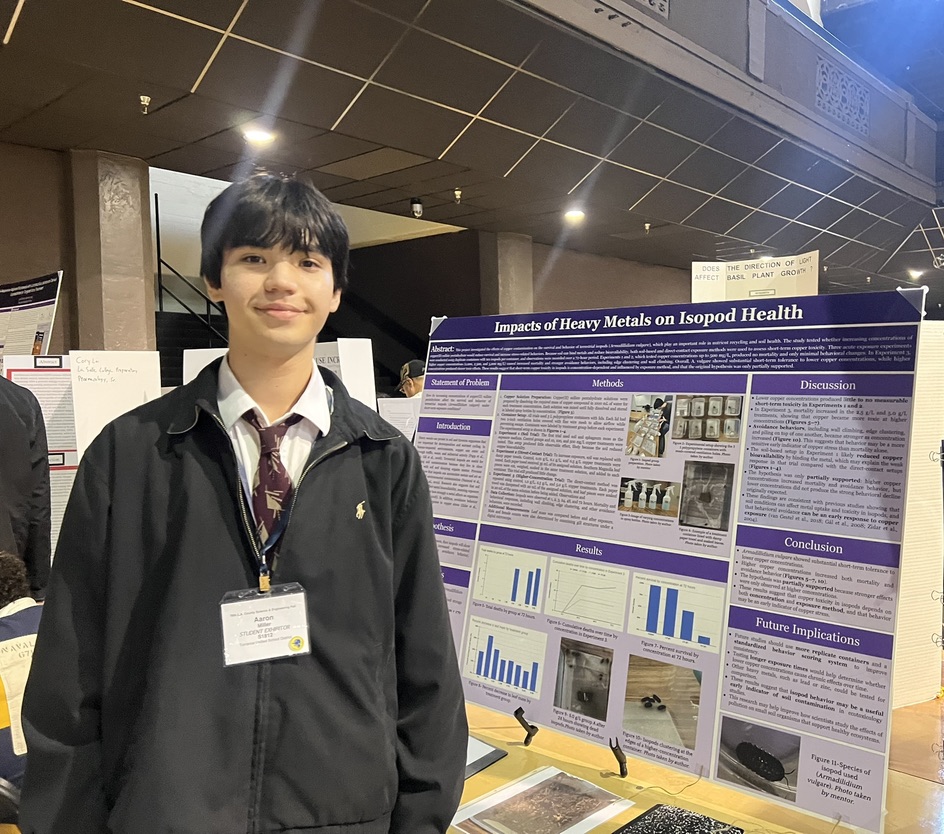
4) Title: Impacts of Heavy Metals on Isopod Health
Name: Aaron Miller (Honorable Mention)
School: South High School
Grade: 11
Abstract:
This project investigated the effects of copper contamination on the survival and behavior of terrestrial isopods (Armadillidium vulgare), which support nutrient recycling and soil health. The study tested whether increasing concentrations of copper (II) sulfate pentahydrate would reduce survival and increase stress-related behaviors, including decreased activity and feeding and increased avoidance behaviors, compared to control groups. Because soil can bind metals and limit bioavailability, both soil-based and direct-contact exposure methods were used to assess short-term copper toxicity.
Three acute exposure experiments were conducted using duplicate containers per treatment with ten isopods per-container. Observations were recorded at 1, 2, 3, 24, 48, and 72 hours. Experiment 1 used soil and sphagnum-moss with copper concentrations: 10, 100, and 500 mg/L, along with two control containers. Experiment 2 used the same concentrations applied to solution-soaked paper towels to increase direct exposure. Experiment 3 repeated the paper-towel method at higher concentrations: 1,000, 2,500, and 5,000 mg/L.
Across Experiments 1 and 2 and at concentrations up to 500 mg/L, no mortality was observed and behavioral responses were minimal. In Experiment 3, mortality increased primarily at higher concentrations, with container-to-container variation. Increased avoidance behaviors (aggregation at container edges and frequent wall-climbing attempts) were observed in the 2,500 and 5,000 mg/L treatments.
Overall, A. vulgare demonstrated substantial short-term tolerance to copper-sulfate exposure. Mortality occurred mainly at concentrations ≥2,500 mg/L, while lower concentrations produced limited behavioral-effects. These results suggest short-term copper toxicity in isopods is concentration-dependent and influenced by exposure method, and the original hypothesis was not fully supported.
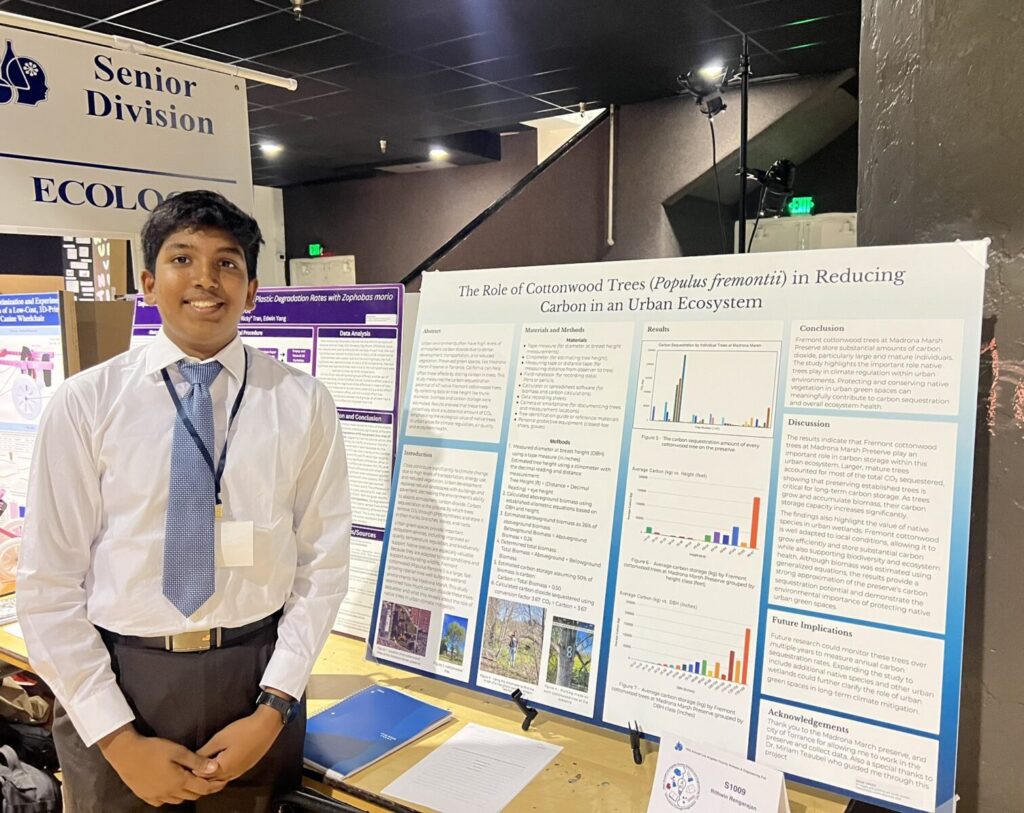
5) Title: Carbon Storage and Sequestration by Native Cottonwood Trees (Pupulus fremontii) in an Urban Area
Student: Rithwin Rengarajan (Participant)
West High School
10th grade
Abstract:
Urban environments typically experience elevated atmospheric carbon dioxide levels due to dense development, transportation activity, and reduced vegetation cover. Preserved green spaces within cities can help mitigate these effects by storing atmospheric carbon in plant biomass. This study examined the potential for carbon sequestration by native Fremont cottonwood (Populus fremontii) trees within Madrona Marsh Preserve, an urban wetland located in Torrance, California.
Madrona Marsh contains approximately 45 naturally occurring Fremont cottonwood trees throughout the preserve. Field data were collected for each tree, including trunk diameter and height, to estimate above and below ground biomass. Carbon sequestration equations were used to calculate the amount of carbon stored by individual trees and the total amount of carbon dioxide sequestered by the cottonwood population. These estimates were used to evaluate the contribution of native cottonwood trees to carbon reduction within an urban ecosystem.
Results indicated that the cottonwood trees at Madrona Marsh collectively sequester a substantial amount of carbon dioxide, demonstrating their importance in carbon storage. Fremont cottonwood trees possess large leaf surface areas, which enhances their capacity for carbon uptake through photosynthesis. The combined sequestration capacity of the cottonwood population highlights the ecological value of maintaining native tree species in urban preserves. This study emphasizes the importance of conserving native vegetation in cities to support climate regulation, improve air quality, and enhance overall ecosystem health. Madrona Marsh serves as a valuable example of how urban natural areas can provide meaningful environmental benefits through carbon sequestration.
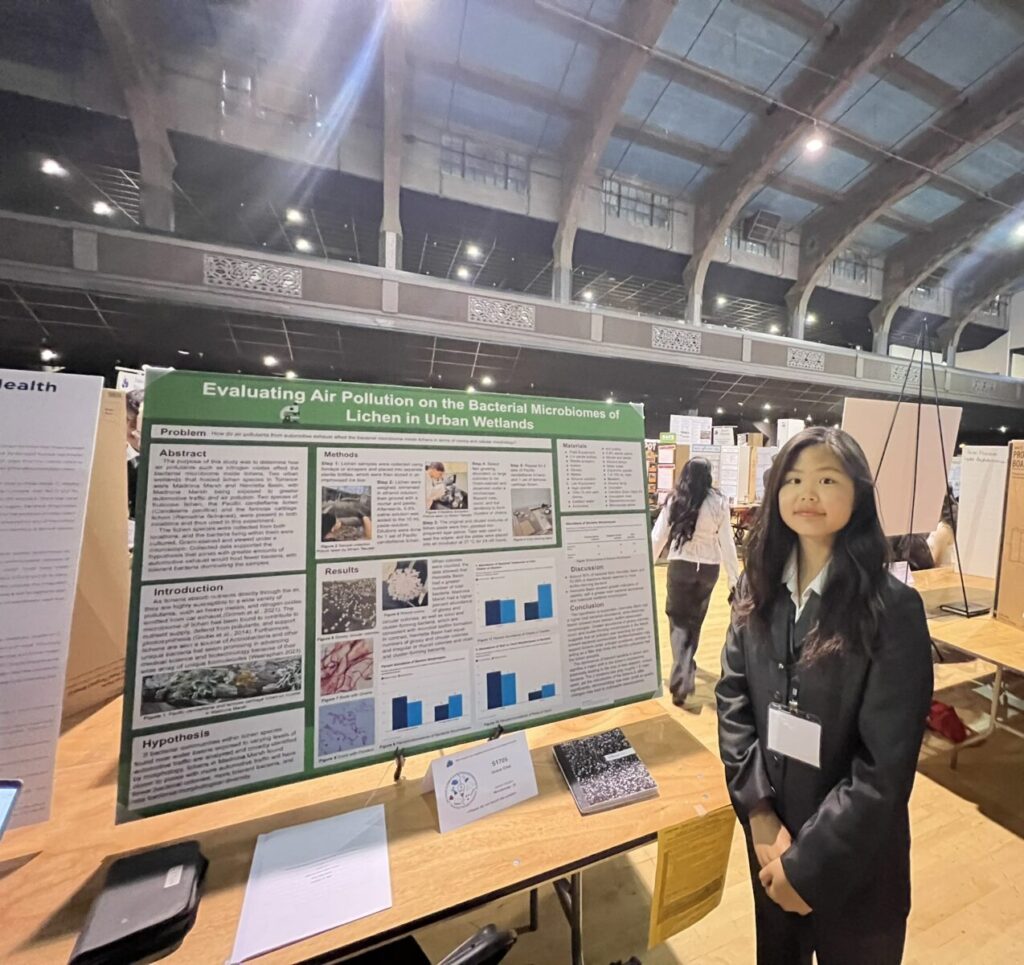
6) Title: Evaluating Air Pollution Using Bacterial Communities Found in Lichen from Urban Wetlands
Student: Grace Choi (Participant)
West High School
11th Grade
This study investigated whether differences in urban air pollution influence the bacterial communities associated with lichens. Lichens are sensitive to air pollution, so they may host diverse bacterial microbiomes that contribute to their growth and stress tolerance. Two urban wetland sites in Torrance, California, Madrona Marsh and Henrietta Basin, were selected, with Madrona Marsh experiencing greater traffic related emissions. Two fruticose lichen species present at both locations, Candelaria pacifica (Pacific candleflame lichen) and Ramalina farinacea (farinose cartilage lichen), were used for comparison.
Lichen samples were collected from both sites, and associated bacteria were cultured on Nutrient Agar, Tryptic Soy Agar, and Eosin Methylene Blue Agar. Cultures were incubated for 24 to 48 hours, after which colony abundance, growth rate, and morphotypes were recorded. Fast growing or dominant colonies were Gram stained and observed under a stereomicroscope to observe bacterial morphology, including coccoid and rod shaped forms and their tendency to form chains or clusters.
Noticeable differences in bacterial communities were observed between locations. Lichens from Henrietta Basin exhibited a higher proportion of chain forming rod shaped bacteria, which may indicate more stable microbial growth patterns. In contrast, lichens from Madrona Marsh showed a greater presence of cluster-forming-rods and coccoid bacteria, along with faster colony growth, suggesting a higher abundance of opportunistic bacteria that may be adapted to environmental stressors. These findings suggest that differences in air quality may influence lichen associated bacterial communities and decrease uncommon and understudied bacteria species that could have been useful in biotechnology or medicine.